
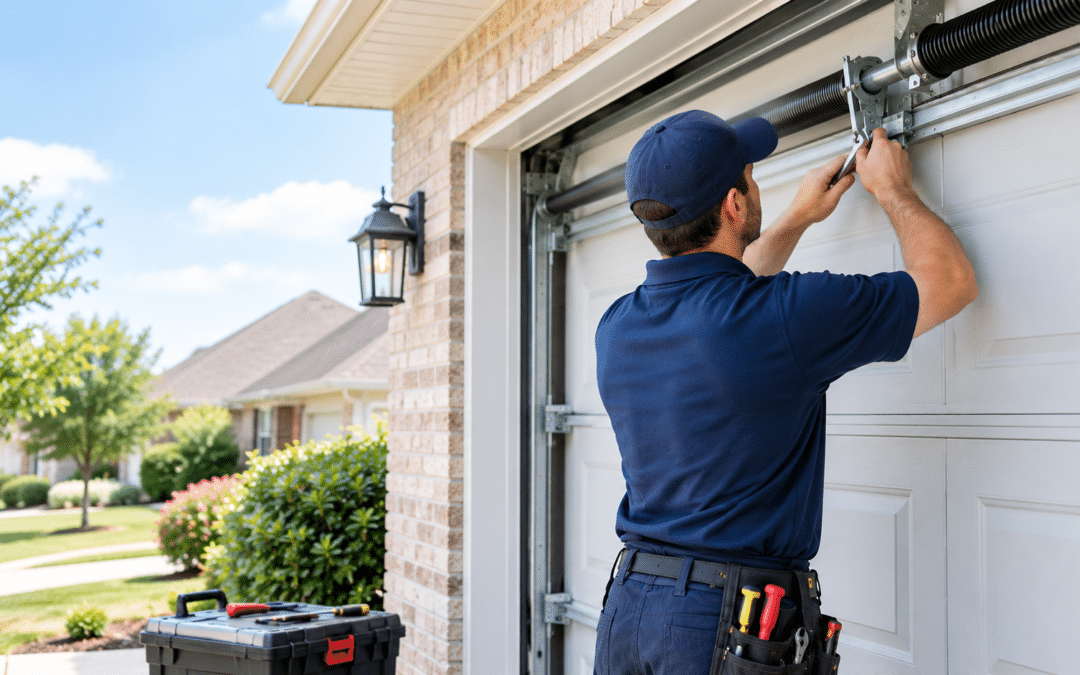
A garage door is one of the largest moving systems in your home, and it gets used far more often than many homeowners realize. Opening and closing the door every day puts regular wear on springs, rollers, cables, hinges, tracks, and the garage door opener.
So, how often should a garage door be serviced?
For most homeowners, a professional garage door inspection and service once a year is a good maintenance schedule. Homes with heavily used garage doors, older equipment, or signs of wear may benefit from more frequent inspections.
Regular maintenance can help identify worn components before they become larger problems, keep the door operating smoothly, and help maintain important safety features.
How Often Should a Garage Door Be Serviced?
For most residential garage doors, annual professional maintenance is a practical starting point.
However, the right schedule depends on factors such as:
- How often you use the garage door
- The age and condition of the door
- The condition of springs, rollers, cables, and hinges
- Whether the garage door is exposed to harsh weather
- Whether the door has been repaired previously
- Whether you notice unusual noises or movement
- How well the door has been maintained
A garage door that opens several times every day may experience more wear than one used only occasionally.
Recommended Garage Door Maintenance Schedule
| Garage Door Use or Condition | Suggested Maintenance |
| Light residential use | Professional inspection about once a year |
| Daily or frequent use | Annual inspection, with additional checks if problems appear |
| Older garage door | Annual inspection or more often if components show wear |
| Door showing unusual noise or movement | Have it inspected promptly |
| Recently repaired door | Follow the technician’s recommended maintenance schedule |
| Commercial or very high-use door | More frequent professional maintenance may be appropriate |
These are general guidelines rather than a universal schedule. A qualified garage door technician can recommend a maintenance interval based on the door’s condition and usage.
Why Does Garage Door Maintenance Matter?
Garage doors contain multiple moving and tension-loaded components. Over time, normal use can cause parts to wear, loosen, or become misaligned.
Routine maintenance gives a technician an opportunity to inspect the system and identify potential problems before they interfere with normal operation.
Regular service can help with:
1. Identifying Worn Components
Rollers, hinges, cables, springs, bearings, and other components can wear over time.
An inspection can help identify components that may need attention before they affect the rest of the system.
2. Keeping the Door Operating Smoothly
A properly maintained garage door should generally move smoothly through its opening and closing cycle.
Grinding, excessive vibration, binding, or unusual resistance can indicate that something needs to be inspected.
3. Maintaining Safety Features
Modern garage doors and openers include safety features designed to help prevent accidents.
During routine maintenance, a technician can check relevant safety components and confirm that they are functioning properly.
4. Reducing Unexpected Problems
Maintenance cannot prevent every garage door failure, but identifying worn or damaged components early may reduce the likelihood of an unexpected problem.
This can be particularly useful if your garage door is used multiple times every day.
What Is Included in Garage Door Service?
A professional garage door service can vary depending on the company, door type, and condition of the equipment.
A typical inspection may include checking:
- Springs and spring system
- Cables
- Rollers
- Hinges
- Tracks
- Brackets and fasteners
- Garage door balance
- Door movement
- Garage door opener
- Safety sensors
- Auto-reverse function
- Unusual noises or vibration
- Visible signs of wear or damage
A technician may also recommend appropriate adjustments, lubrication, or replacement of worn components when necessary.
Important: Not every garage door component should be adjusted or repaired by a homeowner. Springs and other high-tension components can be dangerous if handled incorrectly.
Signs Your Garage Door Needs Service Before the Annual Inspection
You don’t necessarily have to wait for your yearly maintenance appointment if your garage door starts behaving differently.
Consider having the system inspected if you notice:
- Loud or unusual noises
- Shaking or excessive vibration
- Slow or uneven movement
- The door appears crooked
- Rollers or cables appear damaged
- The door does not stay properly balanced
- The opener struggles to operate the door
- The garage door reverses unexpectedly
- The door does not fully open or close
- Visible damage to tracks or other components
These symptoms can have different causes, so a professional inspection can help determine what needs attention.
How Often Should You Lubricate a Garage Door?
Lubrication is one part of garage door maintenance, but it is not a replacement for a professional inspection.
The appropriate lubrication schedule depends on the manufacturer’s recommendations and the components being lubricated.
Homeowners should avoid applying products indiscriminately to every part of the garage door system. Some components, including certain tracks and belts, may not require lubrication.
Always follow the garage door and opener manufacturer’s maintenance instructions.
If you’re unsure which components require maintenance, a garage door professional can inspect the system and provide recommendations.
Does Garage Door Usage Affect Maintenance Frequency?
Yes.
A garage door used only once or twice a day may experience less mechanical wear than one that is opened and closed repeatedly throughout the day.
For example, a household with multiple drivers may cycle the garage door many times every day. That increased use can place additional wear on moving components.
If your garage door is heavily used, an annual inspection is still a useful baseline, but your technician may recommend additional maintenance based on the door’s age and condition.
Does the Dallas–Fort Worth Climate Affect Garage Door Maintenance?
Weather conditions can also affect garage door components.
In the Dallas–Fort Worth area, garage doors are exposed to changing temperatures, strong sun, storms, humidity, and other outdoor conditions throughout the year.
These conditions can contribute to normal aging and wear of exterior materials and mechanical components.
That makes regular inspection particularly useful for homeowners who want to catch visible deterioration or mechanical issues early.
How Long Does Garage Door Maintenance Take?
The amount of time required depends on the garage door system and whether the technician finds any problems.
A basic inspection and routine service may be relatively straightforward when the system is in good condition. If worn or damaged components are discovered, additional time may be needed to diagnose and address the issue.
When scheduling service, ask the garage door company what their maintenance inspection includes.
Can Homeowners Perform Garage Door Maintenance?
Homeowners can perform simple visual checks, but garage doors contain components that can be hazardous to work on without the appropriate experience and equipment.
You can safely start by observing the door during normal operation and looking for obvious issues such as:
- Unusual sounds
- Uneven movement
- Visible damage
- Loose hardware
- Damaged rollers or cables
- Problems with safety sensors
Avoid attempting to adjust or replace high-tension components such as torsion or extension springs unless you are properly trained to do so.
When in doubt, have a qualified garage door technician inspect the system.
Garage Door Maintenance Checklist for Homeowners
A simple visual check can help you notice changes between professional inspections.
Monthly or Regular Visual Checks
Watch the door operate
Does it open and close smoothly without excessive shaking or unusual sounds?
Look at the tracks
Check for obvious damage, bends, or obstructions.
Check the rollers
Look for visible wear or damage.
Check the cables
Look for obvious fraying or damage, but do not attempt to adjust the cables.
Test the safety reverse feature
Follow the manufacturer’s instructions for testing the opener’s safety features.
Listen for changes
A new grinding, scraping, popping, or squealing sound may indicate that the system should be inspected.
If anything looks damaged or the door behaves differently than usual, contact a garage door professional.
Annual Garage Door Service: What to Ask Your Technician
When scheduling annual maintenance, ask the technician to evaluate the complete garage door system rather than focusing only on the opener.
Useful questions include:
- Are any components showing significant wear?
- Is the door operating properly?
- Are the springs and cables in good condition?
- Are the rollers and hinges showing excessive wear?
- Is the door properly balanced?
- Are the safety features working correctly?
- Does the opener require maintenance?
- Are there any components that should be monitored?
- When should the next inspection be scheduled?
This can help you understand the current condition of your garage door and plan future maintenance.
Frequently Asked Questions
How often should a residential garage door be serviced?
For many homeowners, once a year is a reasonable maintenance interval. More frequent service may be appropriate for heavily used, older, or problematic garage doors.
How do I know if my garage door needs servicing?
Unusual noise, uneven movement, vibration, visible damage, slow operation, or problems with opening and closing are all reasons to have the system inspected.
Is annual garage door maintenance necessary?
Annual maintenance is a practical way to monitor wear and identify potential problems before they become more serious. It can also help ensure that important safety features are checked regularly.
Can I service my garage door myself?
Homeowners can perform basic visual inspections and follow manufacturer-recommended maintenance procedures. However, repairs involving high-tension springs, cables, or other hazardous components should be handled by a qualified professional.
Does a new garage door need maintenance?
Yes. New garage doors still contain moving components that require appropriate care. Follow the manufacturer’s maintenance recommendations and schedule professional inspections as needed.
How long can a garage door last with proper maintenance?
Garage door lifespan varies significantly depending on the door, components, usage, installation quality, environment, and maintenance. Regular maintenance can help identify wear and keep the system operating properly, but it does not guarantee a specific lifespan.
Keep Your Garage Door on a Regular Maintenance Schedule
A garage door does not have to show a major problem before it deserves attention.
For most homeowners, an annual professional inspection is a sensible starting point, combined with regular visual checks and attention to changes in how the door operates.
If your garage door is heavily used, older, or showing signs of wear, a technician may recommend a different maintenance schedule.
Regular maintenance is ultimately about staying ahead of wear—not waiting until a small issue becomes a major disruption.
Need professional garage door service in Dallas–Fort Worth? Garage Door Rescue LLC provides residential garage door repair, maintenance, installation, and related services throughout the DFW area. Contact the team to have your garage door inspected and determine what maintenance it may need.